Plan for the temperature change, not one number
A crisp morning can become a bright, warm afternoon, while an indoor office may feel cooler than either. Instead of dressing for the temperature at breakfast, look at the forecast across the hours you will be out. Note rain, wind, walking time, and where you can comfortably carry a removed layer. Transitional-weather outfits work best when the base looks complete on its own and every added piece has a clear job. These five formulas are starting points for women using familiar clothes, not a list of new things to buy.
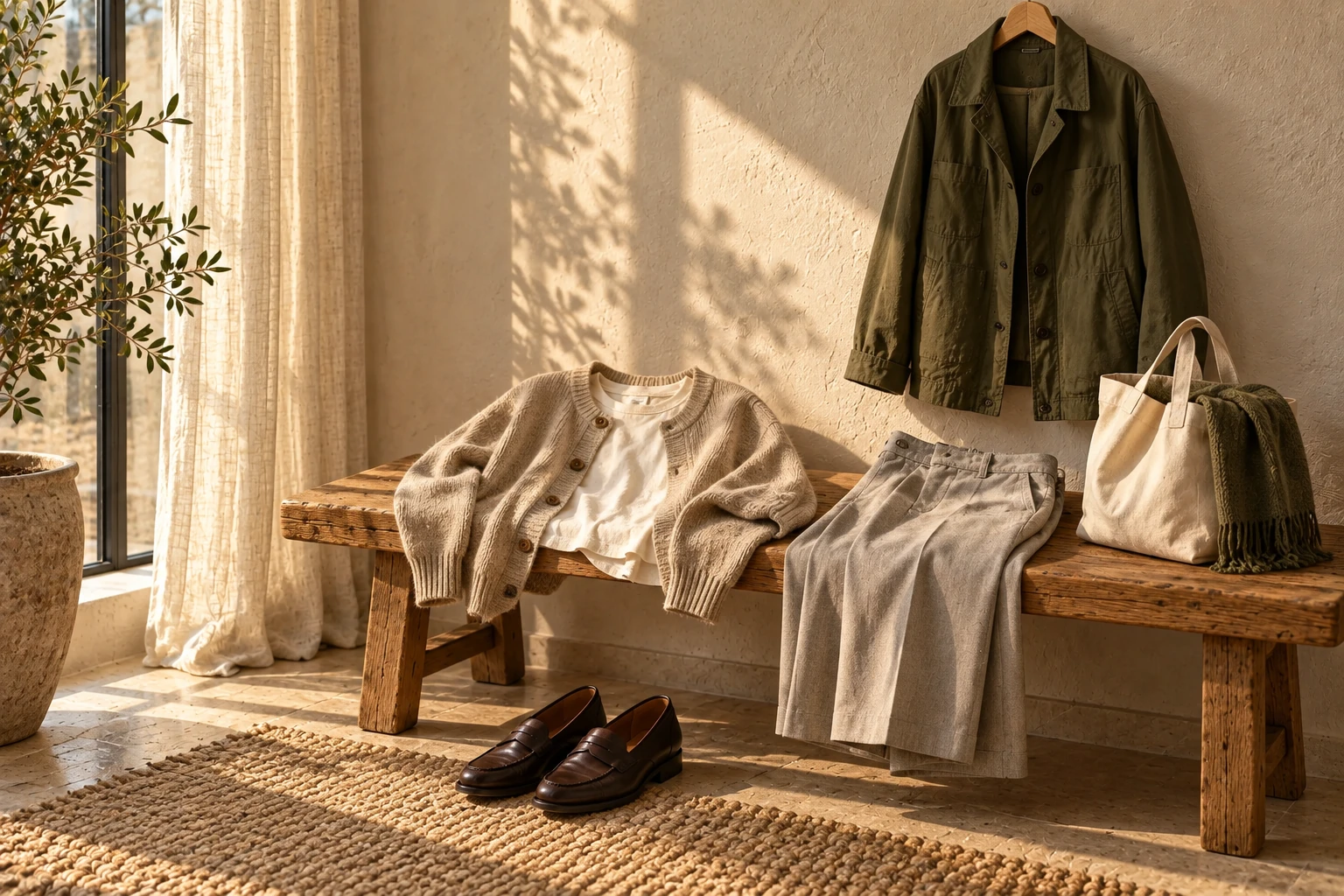
Formula one: tee, wide-leg trousers, light knit
Begin with a fitted or straight-cut tee and wide-leg trousers, then add a fine cardigan or lightweight sweater. Wear the knit normally in the morning; remove it or place it around your shoulders when the day warms. Keep the base colors simple if you want the knit to provide the accent. Check that its fabric can fold into your tote without taking over the bag. Finish with sneakers, loafers, or another shoe you have already worn for the amount of walking ahead. A familiar shoe is more useful than a seasonal look that changes the way you move through the day.
Formula two: midi dress, cardigan, closed shoe
A sleeved midi dress can create a complete base without much coordination. Add a cardigan that ends near the waist or follows the dress’s longer line, depending on the proportion you prefer. Closed flats, loafers, or ankle boots make sense when the morning is cool, but the forecast and your route should decide. If rain is possible, test the dress hem with your outer layer and shoes before leaving. The goal is not to hide the dress beneath several pieces; it is to have one removable layer that keeps the original silhouette recognizable.
Formula three: shirt, jeans, and a soft jacket
Pair straight or relaxed jeans with a shirt that works buttoned, partly open over a base layer, or with its sleeves rolled. Add a soft blazer, chore jacket, or unlined trench. This gives you more than one adjustment without requiring a full change. Try the jacket over the shirt at home and move your arms: two individually comfortable pieces can feel restrictive together. If the proportions look heavy, tuck only the front of the shirt or choose the shorter outer layer. For more ways to build from pieces you repeat, see our guide to creating a capsule wardrobe from what you own.
Formula four: skirt, fine knit, practical outer layer
Start with a midi skirt and a fine knit that can be worn alone. Add a weather-ready outer layer instead of expecting the sweater to handle wind or rain. A cropped jacket can emphasize the waist; a longer coat creates a straighter line. Either can work if you can sit and walk comfortably in the complete outfit. Consider the skirt fabric on a windy route, and keep hosiery optional rather than automatic. If you add it for the morning, make sure you will still be comfortable later. A small change should solve the weather, not create a second styling problem.
Formula five: monochrome base, contrasting layer
Choose a top and trousers in neighboring shades, such as cream and oat, charcoal and black, or navy and denim. Then add one contrasting layer: burgundy, olive, camel, or a color already present in your wardrobe. The base remains intentional after the layer comes off, which is exactly what a changeable day requires. Repeat that contrast once in a bag, scarf, or shoe only if it feels natural. Matching every detail can make a practical outfit harder to assemble. Photograph the version with and without the layer so you know both feel finished before you rely on it.
Use layers as a comfort system
For genuinely cold conditions, styling is secondary to appropriate protection. The National Weather Service’s cold-weather guidance recommends several loose-fitting, lightweight layers and explains that trapped air between them helps insulate; it also advises removing layers to avoid sweating and chill. For an ordinary transitional day, borrow the logic rather than treating every layer as decoration: a comfortable base, an insulating middle when needed, and an outer layer suited to wind or rain. Check the latest local forecast and use warmer gear whenever conditions call for it.
Save the combination for the next similar day
At home, notice which layer you wore, carried, or wished you had. Save the complete outfit, including shoes and outerwear, rather than remembering only the top and trousers. If the day continues into dinner, the small-reset approach in our work-to-dinner outfit guide can help. Smartrobe lets you catalog your clothes and explore outfit suggestions informed by your wardrobe, weather, and plans. See how Smartrobe works or download Smartrobe on the App Store. A useful transitional outfit is not a perfect forecast prediction; it is a combination that gives you room to adjust.
Explore the possibilities in your own wardrobe.
AI-assisted editorial content.