Dress for the whole day, not the first five minutes
A winter outfit has to handle more than the walk from the door. Check the hourly forecast, wind, precipitation, time outside, and the indoor temperature you are likely to meet. Then build from the layer you will still be wearing after your coat comes off. If that base outfit feels complete, the outer pieces can solve the weather without making you look unfinished indoors. This approach also exposes unnecessary bulk early: every layer should add warmth, protection, or a useful change in formality—not simply more fabric.
Start with a base layer that disappears cleanly
For an ordinary workday, a fitted undershirt, long-sleeve tee, or fine merino knit can sit beneath a shirt or sweater without changing its shape. Keep the neckline hidden unless it is meant to be seen, and make sure the sleeves do not bunch at the wrist. In genuinely cold conditions, material matters: the CDC’s winter-weather guidance recommends wool, silk, or polypropylene for the inner layer rather than cotton. Follow the forecast and local safety advice; style is secondary when conditions are severe.
Let the mid layer provide the insulation
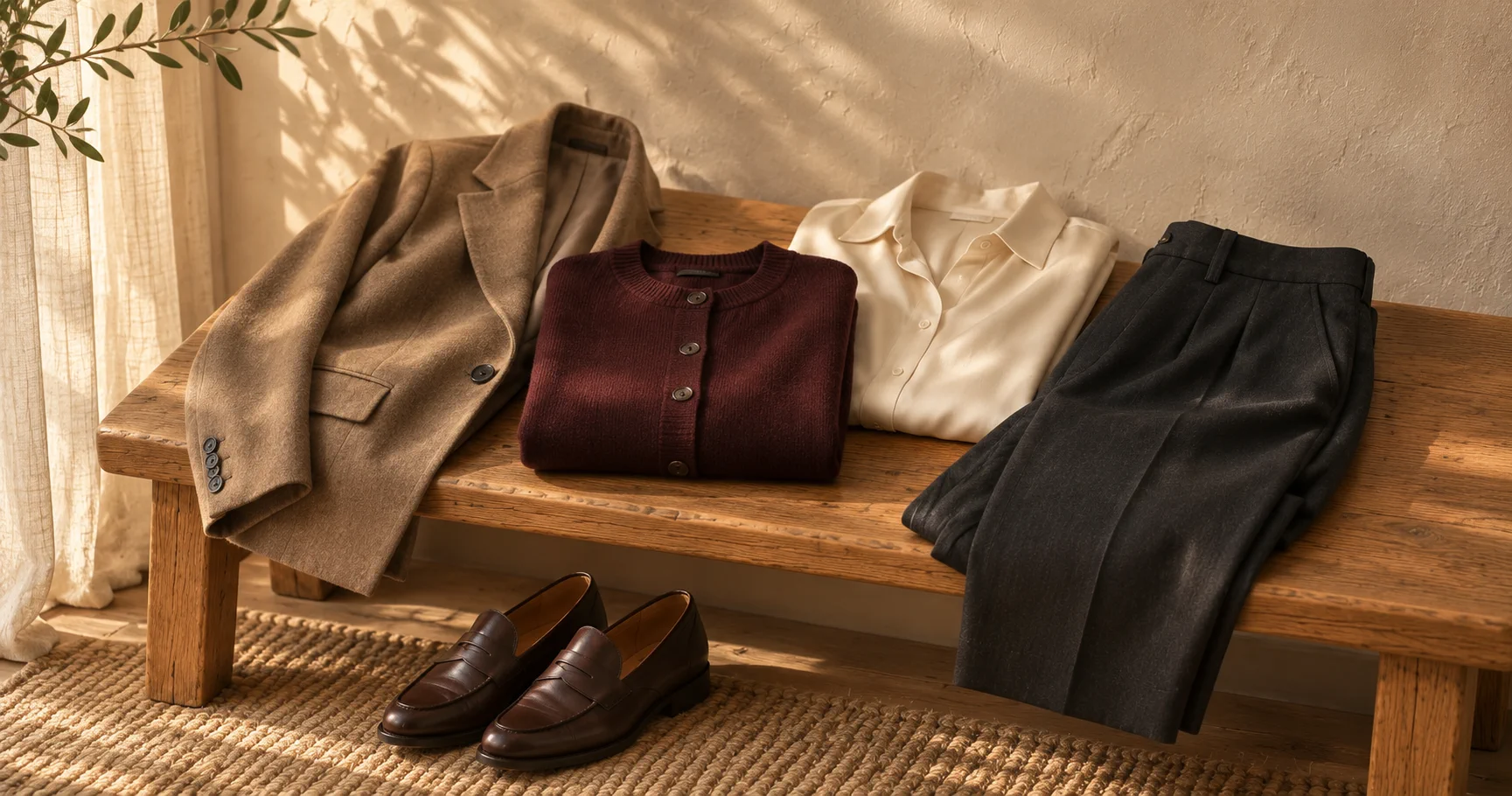
The middle is where warmth and texture can do the most work. Try a fine-gauge crewneck, cardigan, fleece, or brushed overshirt that fits comfortably over your base and beneath your coat. A mid layer should not pull across the chest or force the outer layer’s shoulders upward. For a leaner line, choose one with a defined hem and avoid stacking several long pieces at the same length. Charcoal, navy, oatmeal, and olive combine easily, but texture—a soft knit against a smooth shirt—often creates more depth than another color.
Choose an outer layer that fits the complete stack
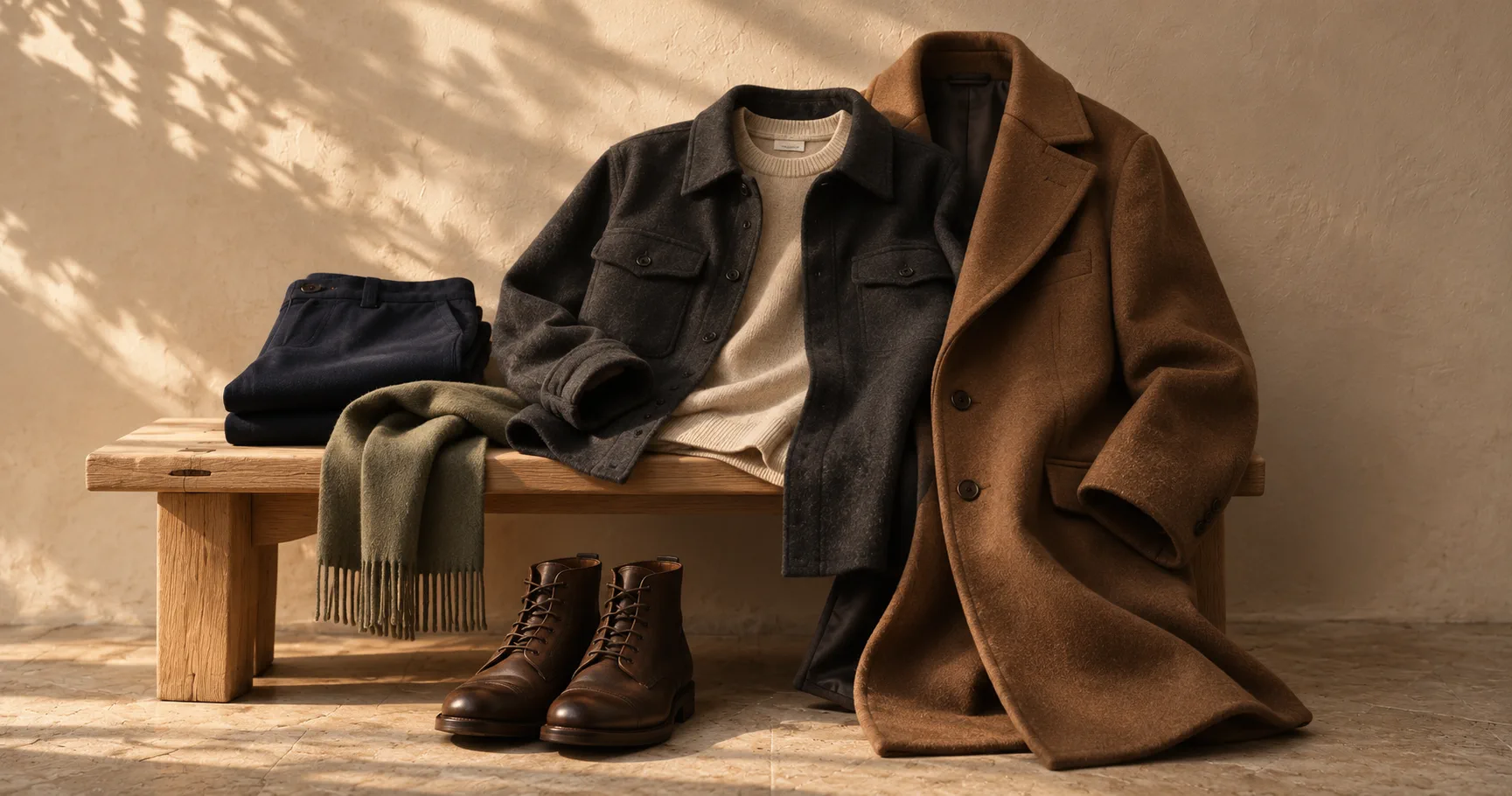
A coat that fits perfectly over a T-shirt may be too tight over winter layers. Try it with the thickest realistic combination you plan to wear, then button or zip it, reach forward, sit, and raise your arms. The shoulder should remain settled and the sleeve should not trap everything beneath it. Match the coat to the actual conditions: the National Weather Service advises several loose-fitting, lightweight layers and a tightly woven, water-repellent outer garment for cold weather. Remove a layer if you become too warm and start sweating.
Control volume with one relaxed piece
Warm clothes look bulky when every layer competes for space. Decide where you want the volume. A substantial coat can sit over a fine knit and straight trouser; a chunky sweater works better under a simpler, roomier coat than beneath a tight tailored jacket. Keep trouser breaks and hems clean so the outfit does not gather at both the torso and ankles. When the top half is layered, a straight or gently tapered trouser usually gives it structure. The rule is not that everything must be slim—only that each proportion should have a clear relationship to the next.
Use three formulas before buying anything new
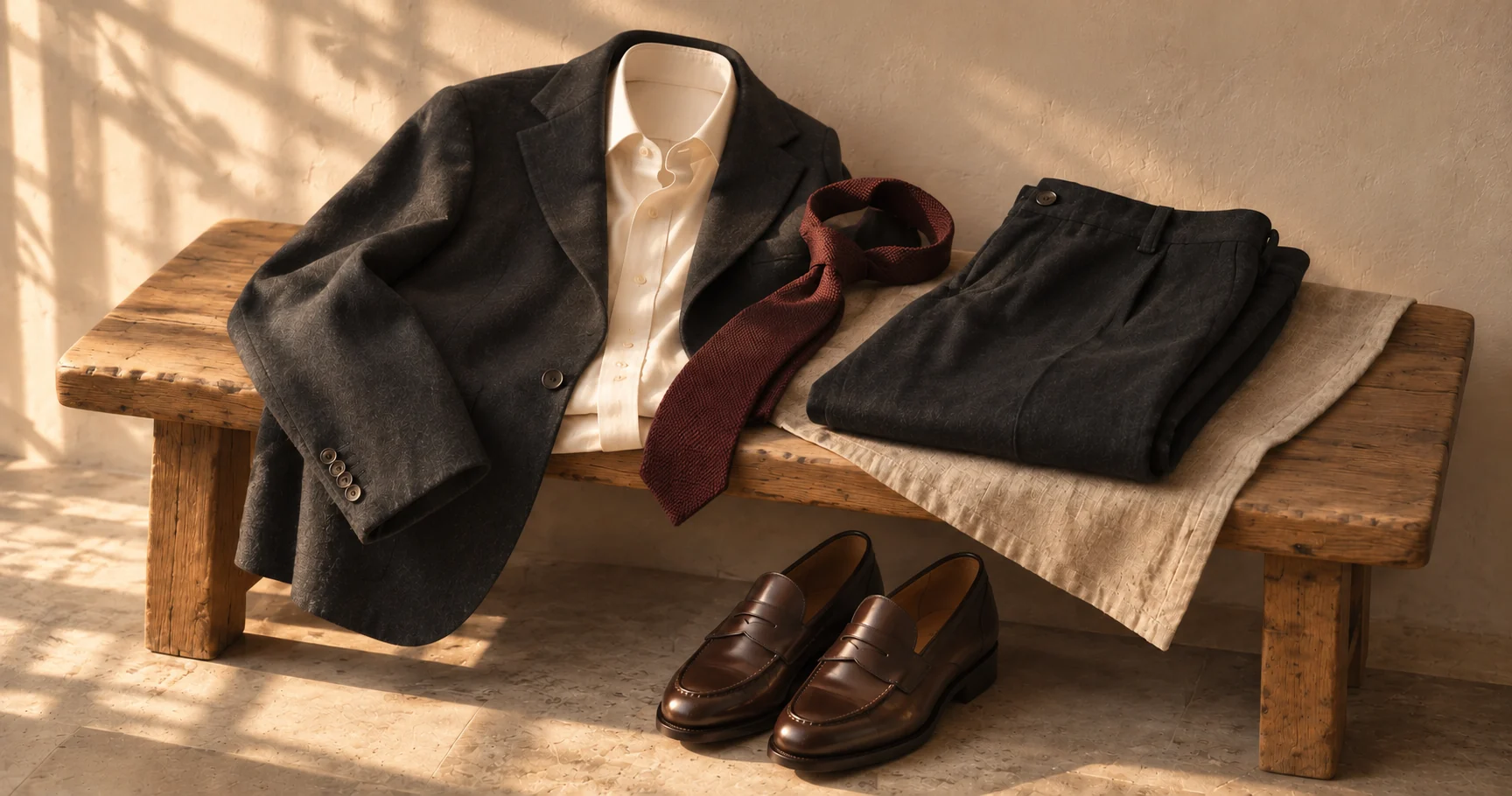
For the office, try a fine base layer, Oxford shirt, merino crewneck, wool trousers, and an overcoat. For a casual weekend, use a long-sleeve tee, overshirt, straight jeans or cords, and a weather-ready jacket. For an evening, begin with a fine knit, tailored trousers, polished boots, and a dark coat; add a scarf only if the conditions call for it. Test each formula with pieces you already own and photograph the full combination. Our men’s outfit-planning guide can help turn the successful versions into a small rotation.
Check the details that make layers comfortable
Small frictions can ruin an otherwise good system. Smooth the base-layer sleeves before adding the knit. Make sure a shirt collar sits either fully inside or intentionally above the sweater. Check that coat cuffs do not swallow your hands and that a scarf can be removed without disturbing everything beneath it. Choose socks for the shoe and temperature, then walk indoors before committing to a long day. If you need a dressier cold-weather combination, the proportion and condition checks in our men’s holiday party guide also apply beyond the festive season.
Save the full system, including what comes off
Record the base, mid layer, coat, trousers, shoes, and accessories together, plus the temperature range in which the outfit felt comfortable. That turns the next cold morning into a small adjustment instead of a new decision. Smartrobe helps you catalog what you own and explore outfit suggestions informed by your wardrobe, weather, and plans. See how Smartrobe works, then download Smartrobe on the App Store or get it on Google Play. The best winter layer is the one that earns its place in the complete outfit.
Explore the possibilities in your own wardrobe.
AI-assisted editorial content.