Build a ready zone, not a winter warehouse
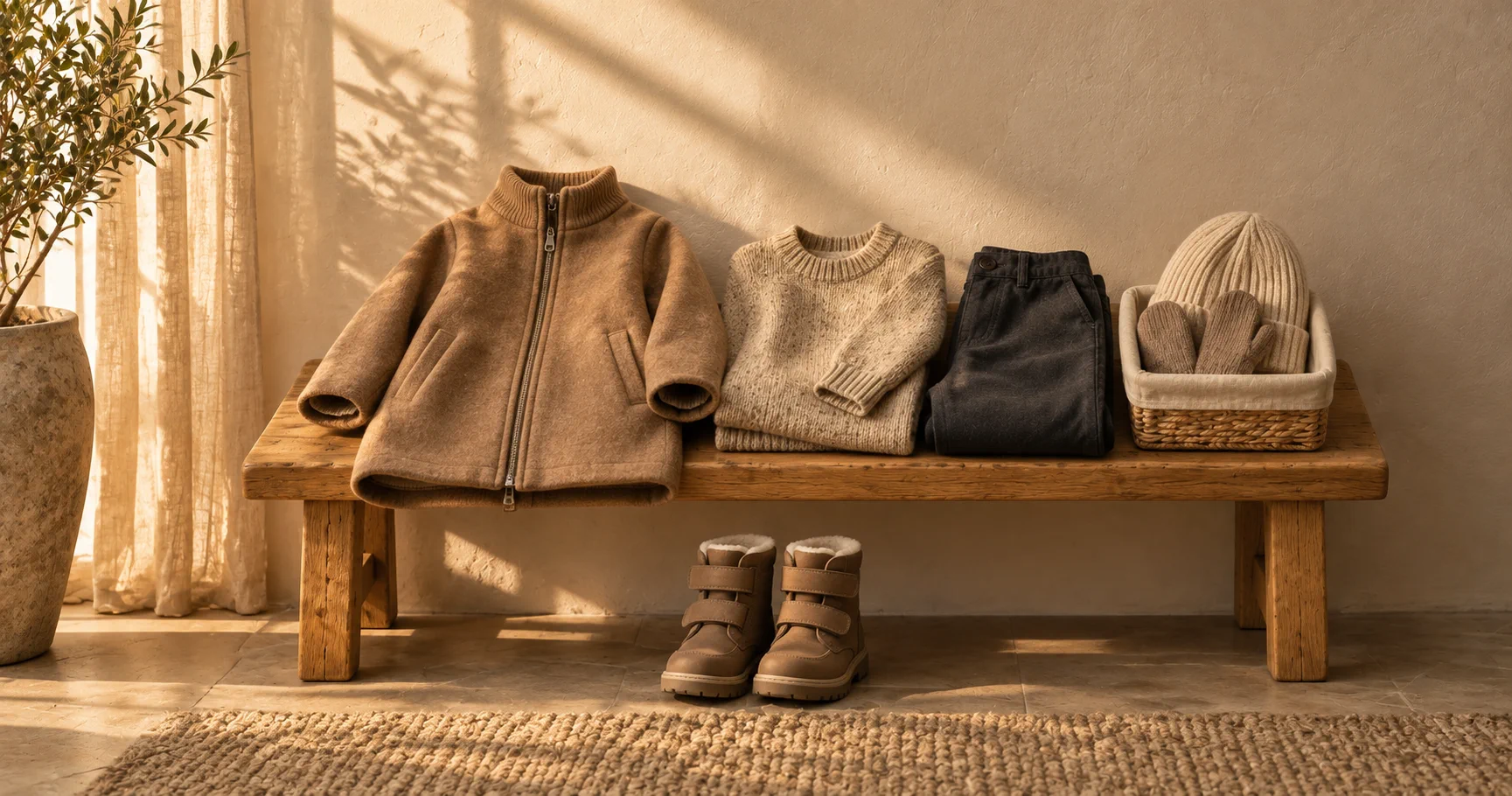
The first cold school morning is a poor time to discover that one boot is missing and every mitten is damp. Give the clothes needed for an ordinary day one small, visible home near the exit: a coat, warm layer, hat, mittens, and boots for each child. Keep backup and next-size pieces elsewhere. This is the ready zone, not storage for the entire season. A short rail, a sturdy hook at a practical height, and one basket can work; use the arrangement that suits your space and supervise children appropriately around furniture and fixtures.
Separate ready clothes from wet clothes
A dry coat should not disappear beneath yesterday’s wet gear. Create a second place for damp mittens, snow trousers, and boots, with airflow and a surface that can handle moisture. Follow each item’s care label, open boots where their design allows, and let everything dry fully before it returns to the ready zone. If there is only one hook or basket, use a simple signal: ready items face the door; damp items go directly to the drying spot. The distinction matters more than matching containers.
Pair the small things before you store them
Mittens and warm socks cause disproportionate morning searching. Keep each usable pair together in a breathable bin, shallow drawer, or pocket organizer. Retire the single mitten from the daily zone until its partner appears. If several children use similar sizes, add a simple name, initial, or color cue that your household already understands. Avoid turning the system into a craft project: one clear label is enough. Place spare pairs beside the ready ones only when they fit now and are genuinely useful between laundry days.
Choose layers for the forecast and the day
Check the temperature, wind, precipitation, and how long your child will be outside. The National Weather Service’s winter guidance recommends loose, lightweight, warm layers, plus protection for the head, hands, and wet or windy conditions. Use that as practical guidance, then follow school or activity requirements and your child’s comfort. Keep a base, warm middle, and weather-appropriate outer layer within reach when conditions call for them. Do not rely on one bulky coat to solve every kind of winter day.
Do a quick safety and condition check
Before outerwear joins the ready zone, check zippers, snaps, loose fasteners, damaged seams, and whether reflective details are still visible. Look carefully at cords. The U.S. Consumer Product Safety Commission identifies hood and neck drawstrings on children’s upper outerwear in sizes 2T to 12 as a substantial product hazard and explains specific limits for waist and bottom drawstrings in larger covered sizes. Consult its current guidance rather than improvising a repair, and check CPSC recalls when an item or its history concerns you.
Run the five-minute Sunday reset
Once a week, return dry gear, reunite pairs, and look at the coming forecast and schedule. Check that the everyday coat still closes comfortably over the layers it will be worn with, boots still fit with winter socks, and the preferred hat is present. Move anything awaiting washing or repair out of the ready zone so it cannot be chosen by mistake. Our guide to planning kids’ outfits for the week can help you connect this outerwear check with the clothes needed for school, activities, and family plans.
Keep future sizes out of the morning decision
A larger coat may be worth keeping, but it should not compete with the one that fits today. Store future sizes in a separate labeled container with the approximate size, season, and contents. Add a reminder to review it before the next cold season or after a growth spurt. If the everyday wardrobe is crowded with pieces that no longer fit, use our parent’s guide to organizing outgrown clothes and hand-me-downs. The daily zone works best when every visible option is wearable now.
Keep the parent’s record simple
Take one quick photo of the ready zone or keep a short note of what fits, what is drying, and what needs replacing. This is a parent’s inventory, not a promise of child accounts or family profiles. For your own wardrobe, Smartrobe can help you catalog clothes and explore outfit suggestions based on what you own and your plans. See how Smartrobe works, then download it on the App Store or get it on Google Play. A useful winter system should make the next exit calmer, not create another household project.
Explore the possibilities in your own wardrobe.
AI-assisted editorial content.